

Our method
This is how we create our unique wines
from an unexplored land
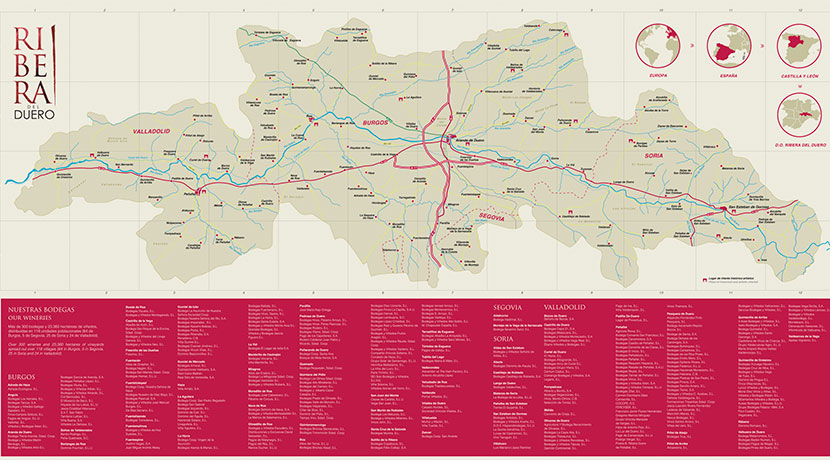
Ribera del Duero has 302 wineries that produce 2,200 wine brands.
About 25% of the grape production is harvested using mechanical harvesting, which is used by 29% of the wineries.
56% harvest the grapes in bulk or in bulk/boxes, and less than 15% of the wineries collect 100% of their grapes manually in boxes, which are then passed through a sorting table in the winery, where those that do not meet the established quality standards are discarded.
To accomplish this, we rely on three pillars:
Prime Location
Bet on Biodiversity
We have a viticulture project that focuses on biodiversity. We practice organic viticulture enhanced through our alliance with nature. We work to support the life of microorganisms living in the soil to naturally improve the living conditions of the plants. We avoid soil compaction, and we do not use biocides or chemical fertilizers, allowing the plant to express 100% of the terroir where it lives.
These actions, along with cluster thinning, ensure that by the time of harvest, the clusters that the plants have are already selected.
The maximum allowed production in the Dominican Republic is 7,000 kg/ha, with an average of 5,400 kg/ha, and Bodegas Marta Maté has an average of 4,000 kg/ha.
Mninimal Oenological Intervention
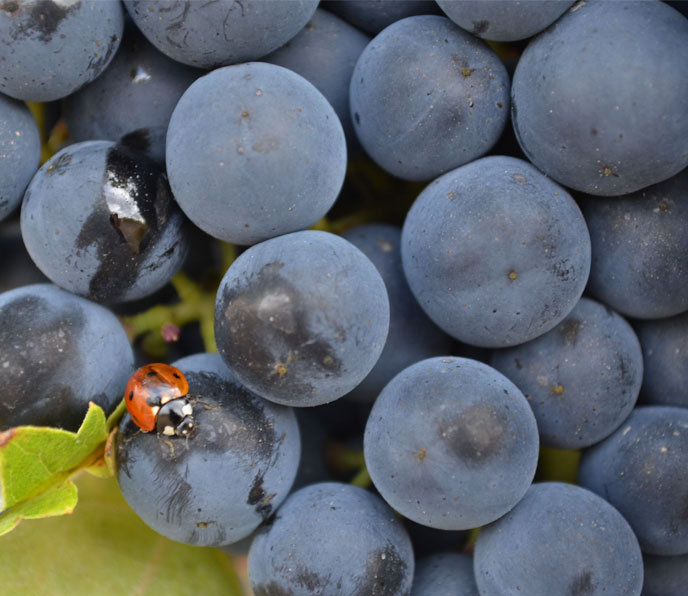
When the grape enters the winery, in search of its optimal quality, we pass it through a bunch selection table or a grape selection table, depending on the wine it is destined for. In this process, less than 1% of the grapes are removed from the tables.
We practice minimal intervention winemaking, with spontaneous fermentations using indigenous yeasts and very low and controlled additions of sulfur dioxide (allowed by CRDO R.D. 150 mg/l, and we use < 50 mg/l).
All our wines undergo a period of aging in wood; however, each year we treat each wine as ``unique,`` preserving the naturalness of the vintage and aging it in wood for as long as the conditions of the vintage dictate.